


Free Consultation at 1800 553 788
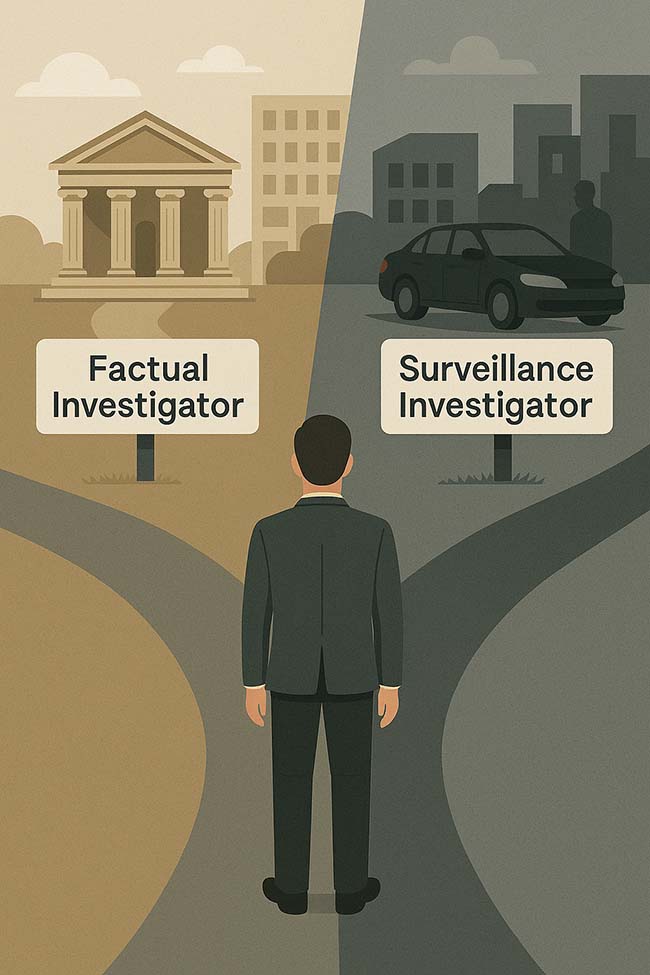
Most individuals who have heard the term, private investigator, have the image of someone lurking in an automobile in order to use a camera. However, the fact is that the investigation process is more complex, and it is divided into various functionalities. Factual investigators and surveillance investigators are two of the most demanded types in Australia.
- Factual investigators conduct interviews, collect statements, and verify information. Their reports are detailed, often used in insurance, legal, and HR disputes.
- Surveillance investigators, on the other hand, observe and document subjects’ behavior. Usually to catch dishonesty or misconduct.
Both roles are critical, but they differ significantly in methods, legal scope, and outcomes.
Which Investigation Method Suits Insurance Fraud Cases Best?
Insurance fraud: This is one of the main reasons a person will go to hire an investigator, especially the insurance investigation company such as AusCovert Investigations or an attorney. The natural way depends on the description of claim:
- Factual Investigators are ideal when claimants, witnesses, or employers need to be interviewed. They verify facts, cross-check documentation, and provide a narrative of events.
- Surveillance Investigators are best when there’s suspicion of exaggeration or dishonesty. For example, if someone claims they’re unable to walk, surveillance can prove otherwise.
Best Practice:
Both approaches are used together by many insurers. Factual investigator sets the stage and where inconsistencies arise may be followed up by a surveillance expert.
How Factual Interviews Provide Legally Admissible Evidence
One major strength of a factual investigator is their ability to conduct legally sound interviews.
These interviews are:
- Structured and recorded with consent
- Conducted neutrally without bias
- Documented in compliance with Australian laws
The eventual factual report contains the checked statements, timelines and documentary evidence. Due to the neutrality of the investigator and training, his work can be accepted in court and have the confidence of insurers, lawyers, and tribunals.
Conversely, surveillance can be effective but only within legal limits and this does not mean that all recording is necessarily admissible in a court of law.
Tools Used by Factual and Surveillance Investigators
Factual Investigator Tools:
- Digital recorders (for interviews)
- Secure reporting software
- Document verification databases
- Court and public record search systems
Surveillance Investigator Tools:
- High-definition cameras and drones
- GPS tracking (if legal in the jurisdiction)
- Concealed recording equipment
- Vehicle-mounted surveillance setups
Although both deal with technology, the factual investigators are keener on people skills and records, more so than surveillance specialists need discretion, patience, and precision of observation.
The Importance of Ethics and Privacy in Both Roles
Whether performing surveillance or conducting interviews, investigators are bound by strict ethical standards.
Key considerations:
- Consent: Factual investigators must obtain proper consent during interviews.
- Legal Compliance: Surveillance must avoid trespassing, stalking, or recording private conversations unlawfully.
- Confidentiality: Both roles handle sensitive data and must comply with the Privacy Act 1988 (Cth).
- Neutrality: Especially for factual investigators, bias or leading questions can invalidate their reports.
Unethical conduct can jeopardize legal cases, damage reputations, and lead to regulatory penalties.
Industries Hiring Each Type of Investigator in Australia
Factual Investigators:
- Insurance companies (e.g., CTP, workers comp, life claims)
- Corporate HR departments (employee misconduct)
- Legal firms (personal injury, liability claims)
- Government agencies (social services, compliance)
Surveillance Investigators:
- Insurance providers (fraud surveillance)
- Family law firms (child custody, cohabitation)
- Employers (unauthorised leave or misconduct)
- Retail and logistics (internal theft, stock losses)
The demand in NSW, Queensland, Victoria, and even worldwide is on the rise, particularly to AusCovert’s factual investigators, as well as other Australian-based companies planning to go into other places as well.
Trainee Roles: Where to Start Your Investigation Career
Many firms offer opportunities for trainee factual investigators. These roles are ideal for candidates with:
- A background in law, criminology, or security
- Strong verbal and written communication skills
- A valid driver’s licence and national police check
Trainees typically learn:
- How to conduct interviews and write reports
- Legal standards for privacy and admissibility
- Case management and reporting systems
The position of surveillance is, however, more applicable to individuals with technical prowess, patience and ability to work independently and discretely.
What Clients Should Know Before Hiring an Investigator
If you’re considering hiring an investigator, you must understand:
- Your objective: Are you verifying facts or catching deception?
- Licensing: Make sure they hold a current private investigator licence in your state.
- Experience: Look for investigators with proven work in your specific need area (insurance, legal, HR, etc.)
- Reporting standards: Ask for sample reports or redacted case summaries.
- Ethical compliance: Ask how they ensure their investigations follow state and federal laws.
Hiring the wrong type of investigator can lead to inconclusive results or legal complications, choose based on your goal.
Conclusion: Factual or Surveillance – Which is Right for You?
Choose a factual investigator if you need:
- Witness interviews
- Claim verification
- Written, admissible reports
Choose a surveillance investigator if you need:
- Video/photo evidence
- Behavioral observation
- Proof of misconduct or fraud
In complex situations – in insurance or corporate risk especially – a combination of both can provide a combination of most defensible and reliable results.
FAQ